
Many ideal-client exercises begin with a familiar list:
How old are they?
What do they do for work?
Where do they live?
What is their income?
Are they married?
What problem do they have?
Those details can help. But they do not necessarily help you understand the person.
A coach can create an impressively detailed client avatar and still have no idea what that person is thinking about while driving home from work, what finally made the problem feel urgent, or why they would trust one source of support and scroll past another.
That was the focus of Week 2 inside Coaching Business Launchpad: moving from a niche into a living client archetype.
Your Niche Is the Market Hypothesis
Your niche gives you a market to explore.
It might identify a particular profession, life stage, transition, health concern, leadership challenge, or desired outcome.
A working niche hypothesis might sound like:
I help a specific group of people address a particular problem so they can experience a meaningful outcome.
That gives you a direction.
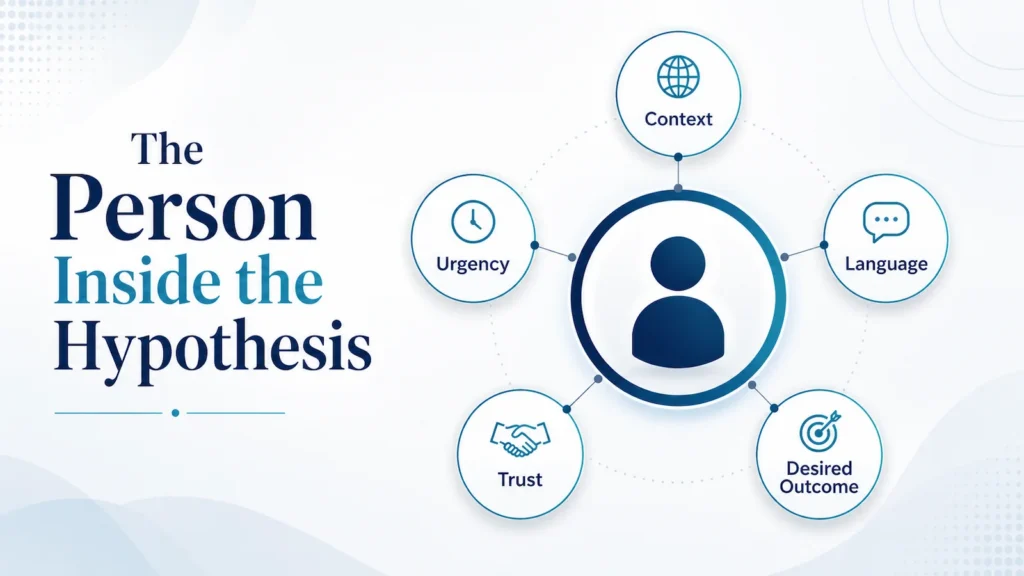
But the archetype is the person inside that direction.
It is the person you are learning to understand well enough that your message no longer sounds like a general description of coaching. It sounds like you understand what is actually happening in their life.
Coaches who are still developing that first layer can begin by learning how to choose a coaching niche without feeling boxed in.
Demographics Tell You Who. Context Tells You Why Now.
Imagine two people who are the same age, work in the same field, and face the same general challenge.
One has already researched the issue, changed several habits, asked for professional advice, and begun looking for additional support.
The other knows that something needs attention but feels overwhelmed, short on time, and unable to add another responsibility to their life.
On paper, they may look like the same ideal client.
In practice, they have different levels of urgency, readiness, language, and trust.
That difference matters.
Your archetype should help you understand:
What is happening in this person’s life right now?
Why has the issue become relevant at this particular moment?
What are they already thinking about?
What feels frustrating, heavy, confusing, or unsustainable?
What do they want to experience instead?
What has stopped them from getting there?
The goal is not to know everything about them.
As I told the cohort:
The goal is not to be certain. The goal is to have better questions and real conversations.
Six Questions That Bring the Person Into Focus
A grounded client archetype includes at least six dimensions.
1. What is their current context?
What is happening in their work, health, family, identity, leadership, relationships, or transition that makes coaching relevant?
“Experiencing stress” is broad.
“Leading a growing team while caring for an aging parent and questioning whether the pace is sustainable” creates a person we can begin to recognize.
2. What do they want?
What do they want to change, resolve, create, become, or feel more capable of?
Do not stop at a generic outcome such as confidence or balance.
What would confidence allow them to do?
What would balance change in their evenings, relationships, leadership, or health?
3. What feels hard right now?
Look beneath the general problem.
What is the problem creating in their actual life?
They may not describe their challenge using coaching language. They may say:
“I don’t feel like myself anymore.”
“I know what I should be doing, but I can’t seem to make it stick.”
“I’m tired of starting over.”
“I’m successful on paper, but something is not working.”
That language is part of the archetype.
4. What have they already tried?
Your potential client is rarely arriving with a blank slate.
They may have read books, downloaded plans, attended trainings, talked to friends, gone to therapy, hired consultants, changed habits, or followed professional advice.
Those experiences shape what they believe now.
They also shape what they may be skeptical of.
5. What helps them trust?
Credentials may matter.
But so might shared experience, referrals, confidentiality, practical language, cultural understanding, consistency, tone, or a feeling that you will meet them without judgment.
Trust is not generic. It is contextual.
6. Where are they already looking?
Where do they spend attention?
Who do they ask?
What communities, podcasts, professional groups, newsletters, events, search terms, or trusted relationships already influence them?
You do not need to market everywhere.
You need to understand where this person already turns.
The free New Coach Marketing Plan can help you capture these insights and connect them to your messaging and visibility choices.
Mark Your Guesses Clearly
The first archetype draft will contain assumptions.
That is expected.
The problem is not making assumptions. The problem is forgetting that they are assumptions.
Mark what you know.
Mark what came from a real conversation.
Mark what came from your own lived experience.
Mark what still needs to be tested.
Then talk to people.
Ask what the issue looks like in their actual day.
Ask what they have already tried.
Ask what feels unresolved.
Ask what they would consider meaningful progress.
Ask what would make support feel credible and useful.
A client archetype should become more accurate through evidence—not more elaborate through imagination.
You Should Be Able to See the Person
A useful archetype eventually becomes specific enough that you can picture the person.
You know the moment you are speaking to.
You recognize some of the language they use.
You understand what they are trying to protect, change, regain, or become.
You begin to see where they might encounter your work.
And other people can recognize them too.
Instead of responding to your niche with:
“That sounds interesting.”
They begin saying:
“I know someone you should talk to.”
That is what clarity creates.
Not a fictional avatar.
A real person you are learning to serve.
The next Coaching Business Launchpad cohort begins September 15. Apply for the next cohort and develop your niche, messaging, market understanding, and visibility through real action and feedback.